How quantum vibrations can help capture lost solar energy
A team of MSU chemists has successfully observed one of the fastest and most consequential events in solar energy conversion: the instant a light-excited semiconductor nanocrystal begins handing off an electron to a neighboring molecule.
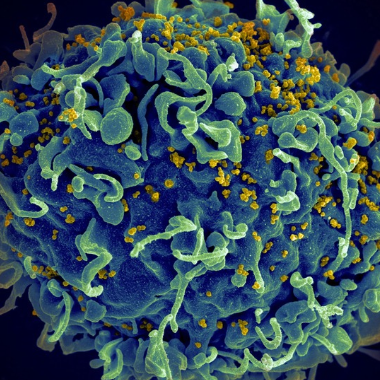
In new findings published in The Journal of Physical Chemistry C, the team captured the first 50 femtoseconds of electron transfer between tiny semiconductor particles known as quantum dots, or QDs, and an organic molecule called methyl viologen.
“With a femtosecond being just one quadrillionth of a second, we’re looking at some of the absolute earliest interactions between these two systems after shining light,” said Dr. Nila Mohan, first author of the paper and a graduate of Professor Warren Beck’s lab in MSU’s Department of Chemistry.
While exploring the initial, blindingly brief moments of electron transfer, Mohan’s team and collaborators at Middle Tennessee State and Stony Brook universities encountered a surprising moment of quantum harmony — a brief instant where both a QD and methyl viologen molecule vibrated at identical frequencies.
Supported by funding from the U.S. Department of Energy, the discovery of this moment of “coherence” has the potential to help researchers recover energy that was previously thought lost during light-induced chemical reactions.
“Rather than wasting that energy, there’s now an opportunity for us to grab it,” explained Beck. “It’s one of those things the ultrafast research community has long wondered about, and now we’ve been able to detect it for the first time.”
Good vibrations
When QDs absorb energy, their electrons are quickly kicked into a higher energy state. When those electrons relax, that energy is then fired off as a photon, a particle of light.
The color of this light depends on the QD’s size, meaning scientists can fine-tune particles to their research needs, from smaller blue-producing dots to larger red ones.
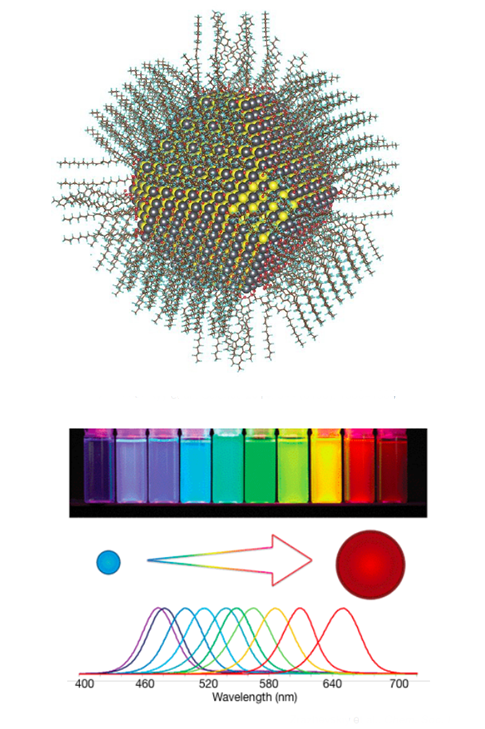
Today, you’ll find QDs used in applications ranging from medical imaging and quantum computing to television displays, as well as the subject of the 2023 Nobel Prize in Chemistry – the very same year Mohan completed her Ph.D.
While electron transfer in QDs is already utilized for a range of photochemical applications, scientists are naturally keen to improve upon the process. For the Beck Group, this meant finding ways to better leverage QDs when it came to solar energy.
“These little chunks of semiconductor were thought to be the way to get light harvesting materials into solar cells, but there’s a catch,” explained Beck. “When QDs initially absorb light, they very, very rapidly get rid of a fair amount of that energy as heat, and it’s wasted.”
To better understand electron transfer, the researchers knew they needed to observe the early, near-instantaneous moments of the phenomenon.
“Probing these short time scales means you need very short laser pulses, and I can say the Beck Group is one of the few labs in the world that can truly do it,” said Mohan, now a process engineer at Applied Materials where she’s applying the same light-matter interaction principles she once studied in QDs to silicon.
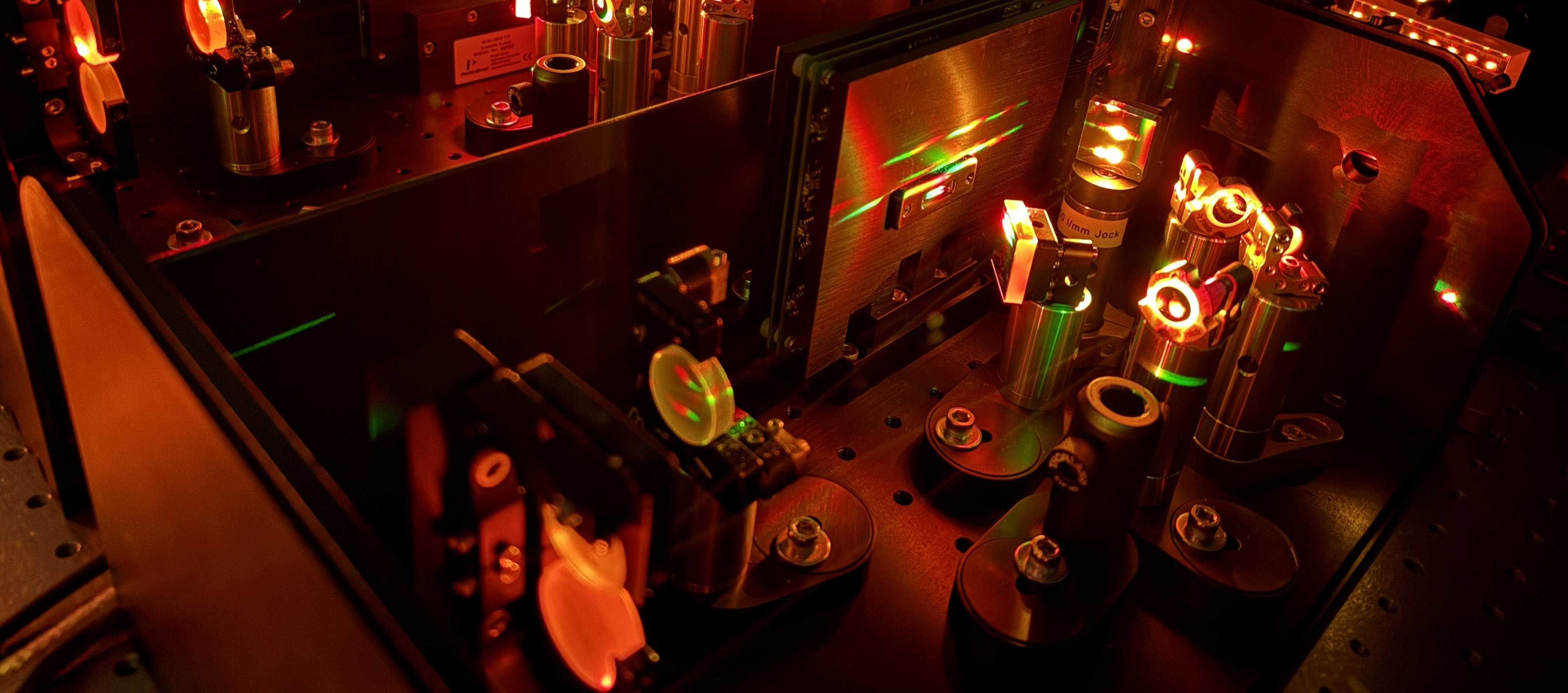
With their latest experiment requiring laser pulses of just seven femtoseconds to build an accurate picture, the researchers luckily didn’t have to go far to find the right tools for the job.
Just down the hall from the Beck Group you’ll find University Distinguished Professor Marcos Dantus. A fellow ultrafast chemist, Dantus had personally designed an instrument known as a pulse shaper, which allows scientists to precisely manipulate laser pulses for particular experiments.
When they finally peered into the first moments of electron transfer, the team found their unexpected moment of quantum coordination.
As the QD’s electrons absorbed energy, the particle began to vibrate, and these vibrations soon paired with those found in the nearby methyl viologen molecule.

“Those vibrations in the QD coupling with the vibrations found in the acceptor molecule – that ultimately facilitates electron transfer,” said Mohan.
Seeing how these vibrations play a role in an electron handoff between QDs and other materials has huge implications for understanding the fundamental mechanics of light-driven chemistry.
This is especially so because this brief moment of coherence precedes the notorious loss of energy QDs suffer from.
“Now that we know this is happening, we might be able make molecules that could capture light energy and store it for a short time in coherences,” said Beck, who sees the findings as an exciting leap toward more efficient solar storage.