2026 Dow/Karabatsos Lectureship
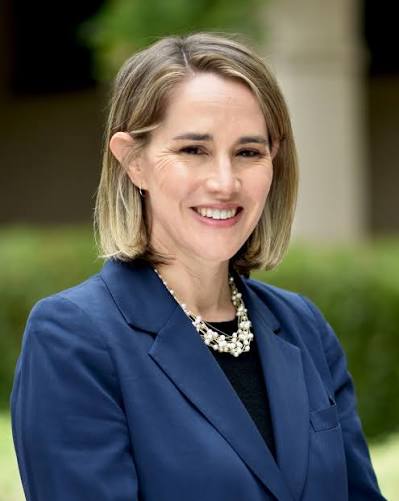
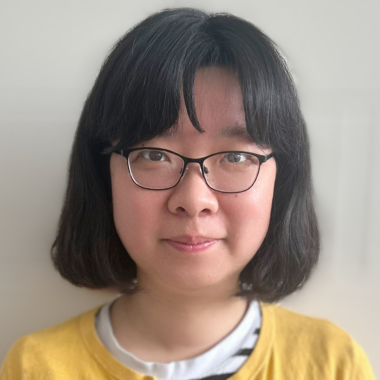
Professor Sarah Reisman, Bren Professor of Chemistry; Norman Davidson Leadership Chair, Division of Chemistry and Chemical Engineering, California Institute of Technology
Professor Sarah Reisman
Bren Professor of Chemistry;
Norman Davidson Leadership Chair,
Division of Chemistry and Chemical Engineering
California Institute of Technology
Lecture Series
Necessity is the Mother of Invention, Natural Products and the Chemistry they Inspire
Wednesday, November 4th, CEM 136 @ 3:00 pm
Reductive Sm Catalysis
Thursday, November 5th, CEM 136 @ 4:10 pm
Biography
Sarah Reisman is the Bren Professor of Chemistry and the Norman Davidson Leadership Chair of the Division of Chemistry and Chemical Engineering at the California Institute of Technology.
A native of Bar Harbor, Maine, she earned her B.A. from Connecticut College, where she first discovered a passion for organic synthesis.
Reisman received a Ph.D. in chemistry from Yale University in 2006, with a thesis detailing the total synthesis of the natural product welwitindolinone A isonitrile. As an NIH postdoctoral fellow at Harvard University, she pursued further studies in asymmetric catalysis.
Reisman joined the Caltech faculty as an assistant professor in 2008, was promoted to professor in 2014, and was named Bren Professor in 2020.
Today, Reisman is recognized as a leader in the area of natural product synthesis,
where her group has contributed new strategy-driven approaches to biologically active
molecules.
Series Abstract
The microbes and plants of the natural world are master chemists, producing secondary metabolites that disarm their enemies and confer evolutionary advantages for survival. These natural products, which include well-known therapeutic agents such as penicillin and taxol, serve not only as medicines but also as powerful tools to probe human biology. At the same time, their structural complexity provides an inspiring platform for advancing the frontiers of synthetic chemistry. Our group is engaged in the total synthesis of several architecturally intricate natural products, with a particular emphasis on developing new convergent fragment-coupling and annulation strategies. The densely functionalized frameworks of these molecules, rich in heteroatoms and stereogenic centers, continually challenge the limits of current synthetic technology and motivate the invention of new synthetic methods. Over two lectures, I will share results from both our natural product synthesis and our methods development projects. My first seminar will highlight recent advances from our laboratory in the total synthesis of diterpenes, highlighting the application of modern transition metal catalysis in total synthesis. My second seminar will describe our recent forays into reductive Sm catalysis, including new avenues for asymmetric catalysis.