Display Accessibility Tools

Accessibility Tools

Grayscale

Highlight Links

Change Contrast

Increase Text Size

Increase Letter Spacing

Readability Bar

Dyslexia Friendly Font

Increase Cursor Size

Beck Research Group

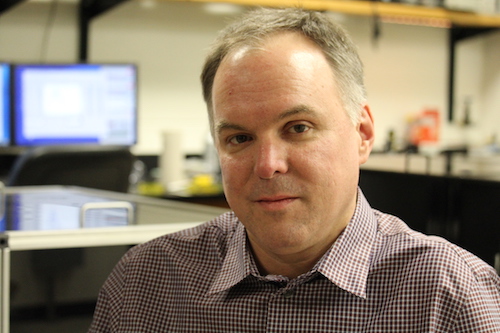
Professor Warren F. Beck

B.S. 1982, Davidson College; Ph.D., Yale University, 1988 (with Prof. Gary Brudvig); Miller Institute Postdoctoral Fellowship, University of California, Berkeley, 1989-91 (with Prof. Kenneth Sauer).

The Beck laboratory investigates structural and energy dynamics in photosynthetic light-harvesting proteins, photoreceptors, and energy nanomaterials. This work uses broadband multidimensional electronic spectroscopy as the principal experimental tool as well as advanced techniques in fluorescence and photoluminescence spectroscopy.

Funding for the Beck laboratory is from the Photosynthetic Systems and Photochemistry and Radiation Chemistry programs of the Office of Science, U. S. Department of Energy, Awards DE-SC0010847 and DE-SC0021197, respectively, and from the Chemistry of Life Sciences program of the U.S. National Science Foundation, Awards 1904655 and 2203577.


Phycobilisomes

Structure of the OCP–phycobilisome complex of Synechocystis sp. PCC 6803 from cryo-EM studies by the Kerfeld laboratory. (a) Binding of OCPR dimers to the core of the phycobilisome (PBS), showing the N-terminal and C-terminal domains (NTD and CTD, respectively) as ribbon structures. (b,c) Details of the binding of the OCPR dimer to core allophycocyanin segments (ApcA and ApcB), with the ketocarotenoid canthaxanthin shown in red. From Yang et al., J. Chem. Phys. 2024, 161, 155101, DOI: 10.1063/5.0227360.

The phycobilisome serves as the principal light-harvesting antenna in cyanobacteria. The rods and core segments are composed of oligomeric stacks of small globular protein subunits, each of which binds one or two bilin (linear tetrapyrrole) chromophores. We are currently studying the mechanisms that capture solar photons and transfer the electronic excitation energy down the rods and through the core segments, where photoregulatory processes occur. A long term interest is to determine how the binding of the orange carotenoid protein (OCP) to the rod–core interface controls the transfer of energy from the phycobilisome to the photosynthetic reaction centers in the underlying thylakoid membrane.


Semiconductor Quantum Dots

CdSe QDs synthesized with oleate surface-capping ligands: (a) scanning electron micrograph; (b) size histogram; (c) DART mass spectrum of the strongly bound ligand ensemble, with m/z = 281.25 due to the parent oleate ion. From Mohan T. M. et al., J. Chem. Phys. 2026, 164, 064703, DOI: 10.1063/5.0305043.

Semiconductor quantum dots (QDs) are potentially useful as structurally tunable light-harvesting structures for use in solar cells and in photocatalysis applications. We are studying how the electronic and vibrational structure of large CdSe QDs absorbing in the mid-visible is modified by the binding of organic electron or triplet-energy acceptor molecules to the surface of the QD. We have discovered that the QDs transfer excitation energy to vibrations of the organic ligands on a much shorter timescale than conventional hot-carrier cooling. This result makes it possible to develop more efficient QD-based devices.


Recent publications

Mohan T. M., N; Shameem, S. A.; Leslie, C. H.; Hetherington, C. V.; Levine, B. G; Beck, W. F.  Photoinduced charge transfer and vibronic coherence in CdSe quantum dots with methyl viologen acceptors. J. Phys. Chem. C 2026, 130, 18, 6580–6588, http://doi.org/10.1021/acs.jpcc.6c02147 

Leslie, C. H.; Rockwell, N.; Beck, W. F.  Excited-state vibronic coherences and intramolecular charge transfer dynamics of the photoinactive cyanobacteriochrome NpF2164g5.  J. Chem. Phys. 2026, 164, 095102, http://doi.org/10.1063/5.0305041  

Mohan T. M., N.; Shameem, S. A.; Leslie, C. H.; Hetherington, C.; Cavey, K.; Zhang, M.; Van Patten, P. G.; Levine, B. G.; Beck, W. F. Excited-state vibronic coherences with mixing of core–ligand character promote hot-carrier cooling in oleate-capped CdSe quantum dots. J. Chem. Phys. 2026, 164, 064703, http://doi.org/10.1063/5.0305043  

Shameem, S. A.; Mohan T. M., N.; Tilluck, R. W.; Hetherington, C. V.; Levine, B. G.; Beck, W. F. Ligand control of ultrafast hot-carrier cooling in CdSe quantum dots by a coherent nonadiabatic mechanism. J. Phys. Chem. Lett. 2026, 17, 1055-1061, http://doi.org/10.1021/acs.jpclett.5c03429   

Hetherington, C. V.; Mohan T. M., N.; Shameem, S. A.; Beck, W. F.; Levine, B. G.  Conical intersections shed light on hot carrier cooling in quantum dots.  J. Chem. Phys. 2025, 163, 214703, http://doi.org/10.1063/5.0295696

Rose, J. B.; Gascón, J. A.; Sheppard, D. I.; Kerfeld, C. A.; Beck, W. F. Photoactivation transition state and dynamical response of the orange carotenoid protein. J. Phys. Chem. B 2025, 129, 12841–12852, http://doi.org/10.1021/acs.jpcb.5c05483 

Yang, K.; Mohan T. M., N; Rose, J. B.; Leslie, C. H.; Sutter, M.; Kerfeld, C. A.; Beck, W. F. Spectral broadening and vibronic dynamics of the S2 state of canthaxanthin in the orange carotenoid protein. J. Chem. Phys. 2024, 161, 155101, http://doi.org/10.1063/5.0227360 

Beck, W. F. Intramolecular charge transfer and the function of vibronic excitons in photosynthetic light harvesting. Photosyn. Res. 2024, 162, 139–156, http://doi.org/10.1007/s11120-024-01095-5

Rose, J. B.; Gascón, J. A.; Sutter, M.; Sheppard, D. I.; Kerfeld, C. A.; Beck, W. F. Photoactivation of the Orange Carotenoid Protein Requires Two Light-Driven Reactions Mediated by a Metastable Monomeric Intermediate. Phys. Chem. Chem. Phys. 2023, 25, 33000–33012, http://doi.org/10.1039/d3cp04484j 

Sil, S.; Tilluck, R. W.; Mohan T. M., N.; Leslie, C. H.; Rose, J. B.; Domínguez-Martín, M. A.; Lou, W.; Kerfeld, C. A.; Beck, W. F. Excitation energy transfer and vibronic coherence in intact phycobilisomes. Nat. Chem. 2022, 14, 1286–1294, https://doi.org/10.1038/s41557-022-01026-8 


Contact

Professor Warren F. Beck
Department of Chemistry
Michigan State University
578 S. Shaw Lane, Room 3
East Lansing, Michigan 48824–1322 USA
beckw@msu.edu 

Student office, Room 4
Telephone: 517-353-1130

Laser Laboratory, Room 52
Telephone: 517-353-1188