People
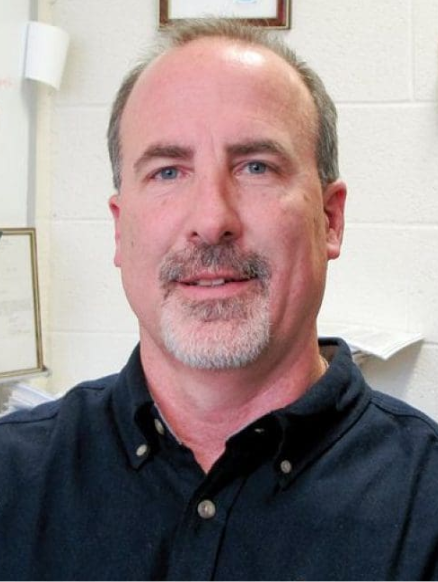
Dr. Greg M. Swain
Greg Swain is a Professor of Chemistry (2000-present) at Michigan State University. Research in the group is interdisciplinary and highly collaborative. The group studies electrochemical reaction kinetics, mechanisms, and interfacial capacitance at various types of chemically modified and unmodified carbon electrodes. These electrodes serve as platforms for electrochemical sensing and immunosensing assays being developed for biomarkers of respiratory disease in novel liquid biopsy specimens, exhaled breath condensate (EBC) and for investigations of neurosignaling processes in vitro in the GI tract. These are electrodes are also being used in electrosynthesis for the production of value-added chemicals from pollutants (e.g., nitrate reduction) and process by-products (e.g., glycerol oxidation). Finally, the group also studies the preparation, mechanical properties and electrochemical/corrosion behavior of additively manufactured metal alloys (aluminum and titanium) and the effects of sonotrode pretreatment have on the metal alloy microstructure and electrochemical properties. A variety of analytical tools are employed in the research including electrochemical and spectroelectrochemical methods of analysis, HPLC, electron and optical microscopy, atomic force microscopy, optical profilometry, x-ray diffraction, x-ray photoelectron spectroscopy, and Raman spectroscopy.
ResearcherID: B-302302010 http://www.researcherid.com/rid/B-3023-2010
ORCID: http://orcid.org/0000-0001-6498-8351
Current MSU Affiliations:
- Professor - Department of Chemistry (analytical)
- Director of the RECR Education Program, Office of Research and Innovation (2023-present)
- RECR Education Coordinator, The Graduate School (2019-present)
- Director, NSF REU Site: Cross-Disciplinary Research in Sustainable Chemistry and Chemical Processes (2014 - 2025)
- MSU Fraunhofer - Center for Coatings and Diamond Technologies
International Affiliations:
- Visiting Guest Professor, Gdansk University of Technology (Poland), 2025
- Special Visiting Professor, Keio University (Japan), 2023
- Japan Society for the Promotion of Science Short-Term Research Fellow (2020-2021)
- Fulbright Specialist - Czech Republic (2018)
- Visiting Professor, Domaine Universitaire, Grenoble, France (summer 2001)
- Special Visiting Researcher (CAPES), Universidade Federal de São Carlos (Brazil), 2013-2016
Service:
- Academic Advancement Network Leadership Fellow, MSU (2018-2019)
- Member MSU Steering Committee (2017-2020)
- At-Large Member MSU Faculty Senate (2017-2020)
- At-Large Member MSU University Council (2017-2020)
- ACS Committee on Professional Training, Member (2015-2020)
- Editor-in-Chief, Elecroanalysis (Wiley), 2021-present
- Editor, Electroanalysis, 2019-2021
- Associate Editor, Critical Reviews in Analytical Chemistry, 2014-present
- Advisory Board, Advanced Engineering Materials, 2014-present
- Editor-in-Chief, Diamond and Related Materials (Elsevier), 2011-2014
- Editor, Diamond and Related Materials, 2009-2011
- Editorial Board, Diamond and Related Materials (Elsevier), 2006-2015

Rosemary Augustine
Rosemary is a 5th year Ph.D. graduate student in the Department of Chemistry. She is investigating aryl diazonium admolecule formation on carbon surfaces using electrochemically assisted and spontaneous formation processes in non-aqueous solution and the effects of the surface modification on electrochemical reaction processes. Specifically, the blocking effects of these adlayers on electrochemical reaction kinetics (e.g., ferri/ferrocyanide and oxygen reduction) are being investigating as a function of diazonium admolecule type, concentration and immersion time. The surface pretreatment (cathodic inhibition) is being developed for carbon fiber composite materials to mitigate galvanic corrosion effects on aluminum alloys at metal-composite joints in aerospace structures. Oxygen reduction occurs at the exposed carbon fibers in the composite and by reducing the rate of this electrochemical reaction (cathodic), the rate of the galvanic corrosion reaction (oxidation) on nearby aluminum alloys is suppressed.
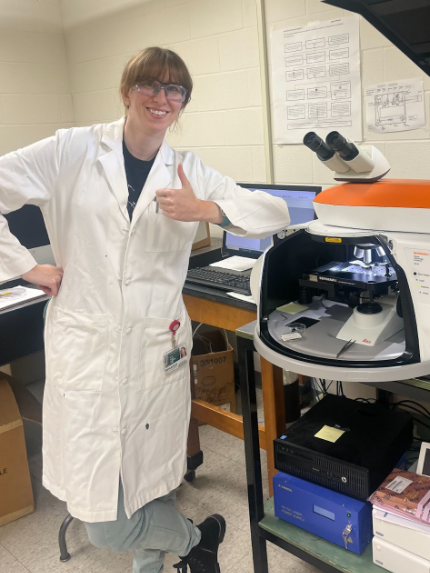
Stevie Adams
Stevie is a 5th year Ph.D. student in the Department of Chemistry. She is investigating the mechanisms and kinetics of aryl diazonium admolecule formation on carbon surfaces using electrochemically assisted and spontaneous formation processes in aqueous and non-aqueous solution. The blocking effects of these adlayers on electrochemical reaction kinetics (e.g., ferri/ferrocyanide and oxygen reduction) are being investigating as a function of diazonium admolecule type, concentration, solvent and immersion time. She is using electrochemical methods and Raman spectroscopy to study the formation of mono and multilayers and to understand how surface carbon-oxygen functionalities affect the adlayer formation (coverage, thickness and defect density). The surface pretreatment (cathodic inhibition) is being developed for carbon fiber composite materials to mitigate galvanic corrosion effects on aluminum alloys when mechanically joined with the composites in aerospace structures.
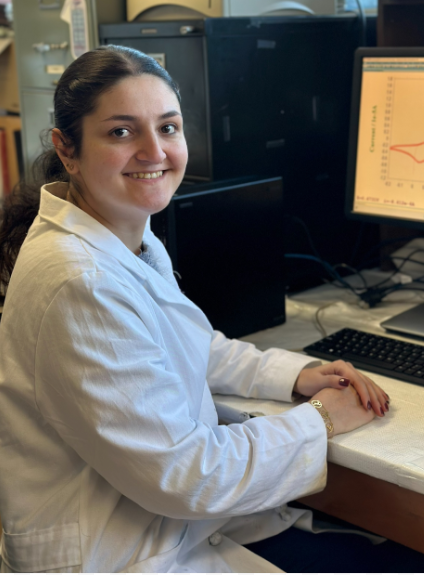
Maral Rahim Soroush
Maral is a 4th year Ph.D. graduate student in the Department of Chemistry. She is studying the electrooxidation of glycerol to value-added products at boron-doped diamond electrodes. The overall goal of this project is to develop fundamental insights about how the electrode microstructure, boron-doping level, surface chemistry, applied potential and current density, solution conditions (aqueous electrolyte and pH), temperature, and flow affect the oxidation reaction mechanism and kinetics. This fundamental knowledge is necessary to optimize the valorization to value-added products in a controlled manner with high Faradaic efficiency and production rate. Various electrochemical methods, batch cell electrosynthesis, and HPLC are being used in the work.
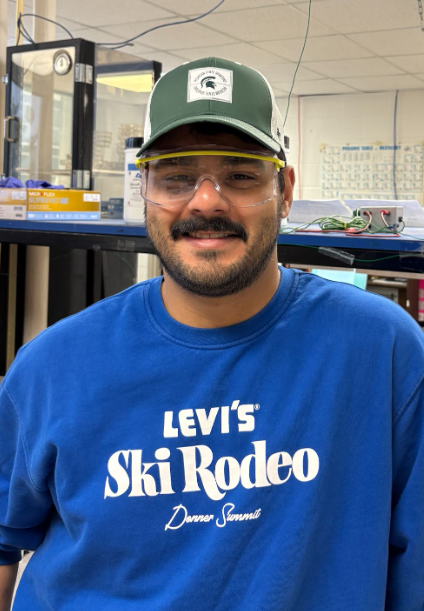
Erfan Omid Najafabadi
Erfan is a 2nd year Ph.D. graduate student in the Department of Chemistry. He is currently working on the development of novel electrochemical immunoassays for (i) soluble PD-L1 (Programmed Death-Ligand 1) - the circulating fragment of an overexpressed protein on cancer cell surfaces (i.e., a biomarker of non-small cell lung cancer) and (ii) BNP (ß-type natriuretic peptide) - is a protein that has become an important biomarker in the diagnosis of heart failure (HF) induced by the toxicity of some chemotherapy drugs. An innovative aspect of his work is the use of these electrochemical immunoassays to probe for these biomarkers in exhaled breath condensate (EBC) liquid biopsy. This project is collaborative with Dr. Borys Hrinczenko, MD - Karmanos Cancer Institute - McLaren Lansing.
Ben Wenig
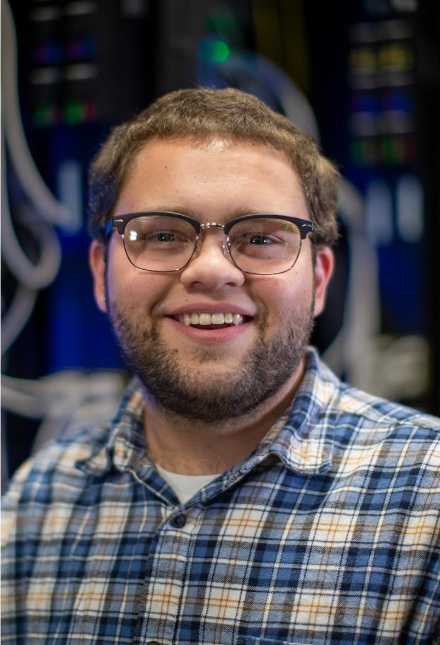
Ben is a 2nd year Ph.D. graduate student in the Department of Chemistry. He is interrogating the early-stage spontaneous formation of aryl diazonium adlayers on pyrolyzed photoresist carbon film materials. He uses various scanning force microscopy techniques such as atomic force microscopy and Kelvin probe force microscopy to analyze topographical and electrostatic force changes during adlayer formation and assembly. X-ray photoelectron spectroscopy is being used for surface analysis. Confocal Raman spectroscopy is also employed to classify the adlayer growth at various surface regions, such as defect sites. Additionally, Ben uses electrochemical and computational methods to investigate the process of diazonium grafting onto carbon electrode surfaces and further quantification of oxygen reduction reaction efficiency at these interfaces.

Grace Leahey
Grace is a 2nd year Ph.D. graduate student in the Department of Chemistry. She is comparing the electrochemical properties of boron-doped diamond and nitrogen-incorporated tetrahedral amorphous carbon thin-film electrodes in aqueous media. She is also studying the electrochemical properties of boron-doped diamond microelectrodes and using the microelectrode as a substrate for a biosensor that utilizes glucose oxidase (GOx) and hexokinase (Hex) immobilized within the electroactive polymer, polyethylenedioxythiophene (PEDOT), to measure ATP. Testing in standard solutions is being performed to determine the ATP detection figures of merit (sensitivity, response time, reproducibility). The project is collaborative with Dr. Tengis Pavlov - Henry Ford Health.
Dr. Maggie Conway
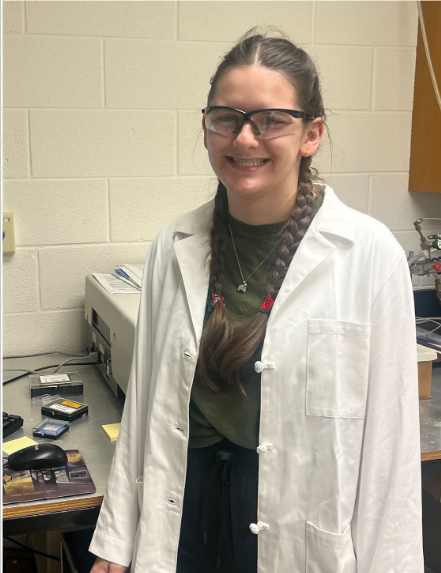
Maggie is a recent Ph.D. graduate of the Swain Group. She investigated the electrochemical reduction of nitrate at boron-doped microcrystalline, nanocrystalline, and ultra nanocrystalline diamond electrodes. Of interest, are the roles of the carbon electrode microstructure, electrode pretreatment, and electrolyte solution on the kinetics of the reduction reaction and the products formed. The goal was to electrosynthesize value-added products (NH3) from the reduction of the aqueous pollutant. Various electrochemical methods and spectroscopic assays were used in the work to quantify products produced. She is currently a postdoctoral researcher at the Michigan State University Veterinary Diagnostic Laboratory (MSU VDL).
Dr. Aaron Jacobs
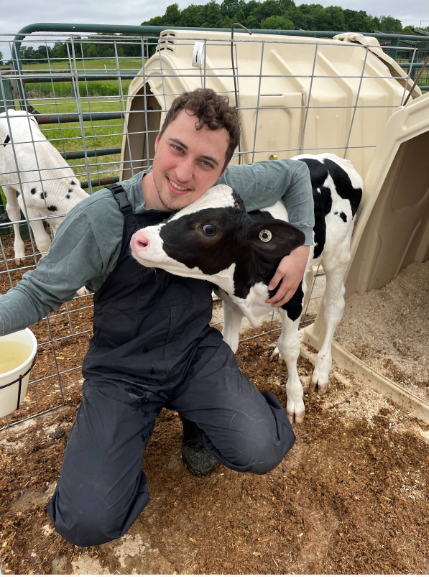
Aaron is a recent Ph.D. graduate of the Swain Group. He used various electrochemical methods, specially designed electrochemical sensors and immunosensors, and HPLC to analyze exhaled breath condensate (EBC) biospecimens obtained from human and animal (bovine) subjects for biomarkers and chemical patterns of respiratory disease. Specifically, he fabricated and tested chemically modified electrochemical sensors (inkjet-printed and screen-printed carbon electrodes, as well as boron-doped diamond electrodes) for measuring biomarkers of oxidative and nitrosative stress in EBC biospecimens obtained from bovine suspected of having bovine respiratory disease. Key biomarkers targeted were pH, NO, H2O2, peroxynitrite and 4-nitrotyrosine. He also worked to establish the clinical value of EBC as a transformative, non-invasive liquid biopsy specimen for lung cancer disease management and prototyped two first-in-class electrochemical immunosensing assays designed for longitudinal, point-of-care monitoring of critical biomarkers: (i) soluble PD-L1 (programmed death-ligand 1) for lung cancer and (ii) BNP (β-type natriuretic peptide) for cardiac dysfunction. He will begin Clinical Chemistry postdoctoral fellowship at the Mayo Clinic in July 2026.