Devon Dattmore
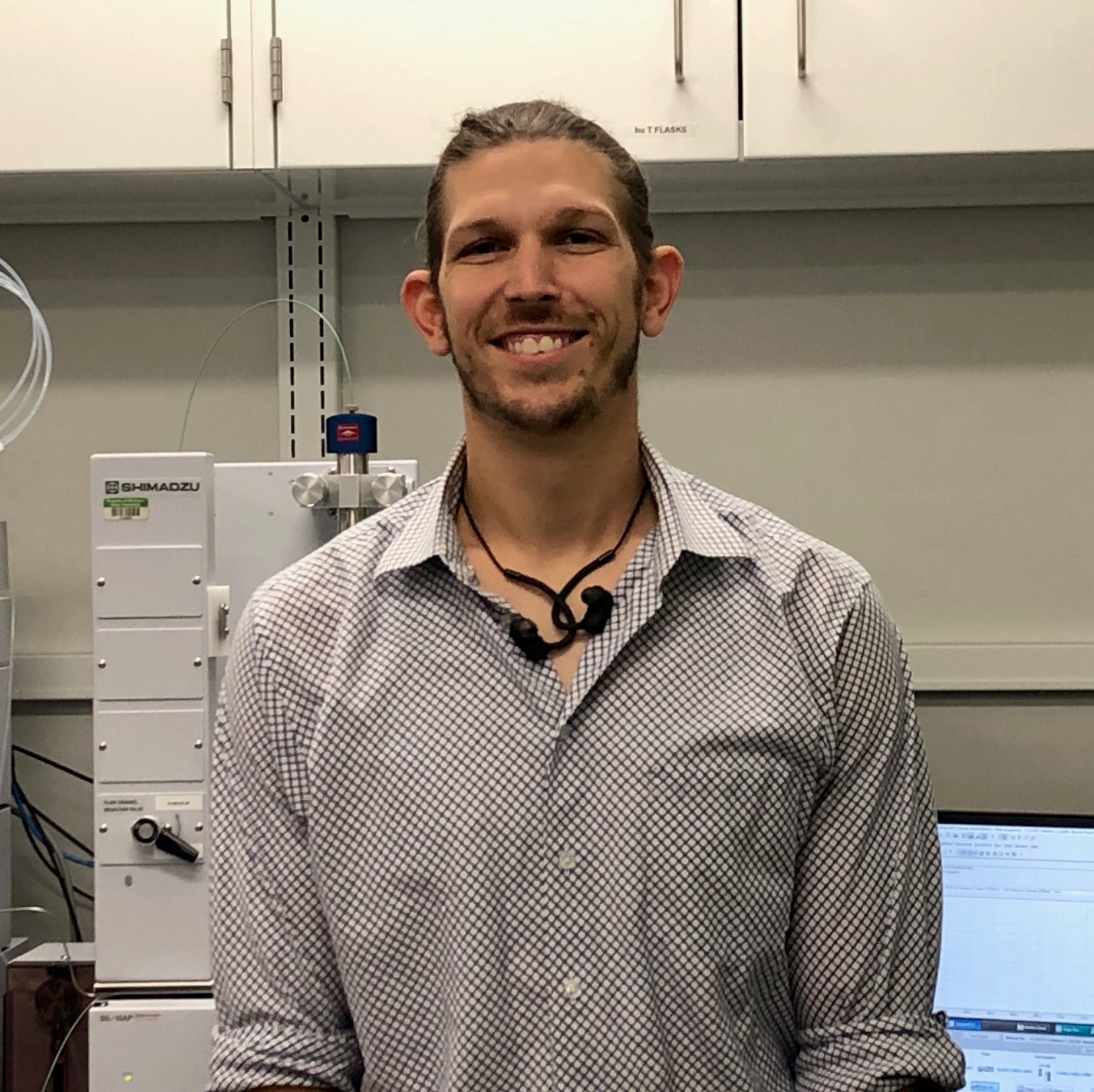
Devon Dattmore, Graduate Student, Pharmacology and Toxicology, Biomedical Toxicology: The Lee Lab investigates the physiological effects of omega polyunsaturated fatty acids (PUFA’s). Mammals cannot synthesize PUFA’s and so must obtain them from dietary sources. Because of this, understanding optimal levels of dietary intake is quite important. Until now, the scientific literature has at times offered conflicting results of the benefits and/or hazards of supplementation. There are a few important factors likely contributing to these disparities, being that: 1) most all PUFA supplements are not regulated by the FDA, and so there may be stark differences in purities of supplements from different producers, 2) the amount and duration of supplementation likely plays an important role in efficacy (manifestation of maximum effect may take years), 3) genetic differences contribute to variations in efficacy between individuals and populations. Furthermore, PUFA’s are metabolized to a variety of lipid mediators, which possess their own unique biological effects. Elevations in some of these metabolites have demonstrable beneficial effects, whereas increases in others seem to be harmful. It’s important to consider how different balances of these PUFA’s, as well as their metabolites, might influence health and disease under different conditions.
There is an abundance of evidence from animal studies that further aligns with genome-wide analysis studies in humans, suggesting that at least one of these metabolites (an omega-6 epoxy-PUFA) may improve insulin sensitivity in type 2 diabetics, as well as offer protection from many of the complications of the disease such as hypertension, kidney disease, beta-islet cell death, neuropathy, retinopathy, and cardiovascular events. This epoxy-PUFA exerts physiological effects extracellularly through signaling cascades, suggesting that it acts through a receptor, which has yet to be determined. Aside from this, transgenic mice that can convert omega-6 PUFA’s to omega-3 PUFA’s are protected from developing insulin resistance. This suggests a beneficial effect by: 1) increasing total omega-3 PUFA’s, 2) an increase in a single omega-3 PUFA’s, and/or 3) a decrease in omega-6 to omega-3 ratio.
Thus, my project has two primary aims: 1) discovery of epoxy-PUFA receptors, 2) elucidating the differential effects of individual and combinations of PUFA’s and epoxy-PUFA’s on insulin resistance. Together, these investigations may reveal lucrative drug targets, as well as improve dietary recommendations for type 2 diabetics.
2020 NEWS! Devon Dattmore, 4-20-2020, received a predoctoral fellow to the NIEHS Training Grant in Environmental Toxicology
trans, trans-2,4-Decadienal, a lipid peroxidation product, induces inflammatory responses via Hsp90- or 14-3-3ζ-dependent mechanisms.
Wang Y, Dattmore DA, Wang W, Pohnert G, Wolfram S, Zhang J, Yang R, Decker EA, Lee KSS, Zhang G. J Nutr Biochem. 2020 Feb;76:108286.
Crystal structure of E. coli PRPP synthetase.
Zhou W, Tsai A, Dattmore DA, Stives DP, Chitrakar I, D'alessandro AM, Patil S, Hicks KA, French JB. BMC Struct Biol. 2019 Jan;19(1):1.
Structural and Functional Basis for Targeting Campylobacter jejuni Agmatine Deiminase To Overcome Antibiotic Resistance.
Shek R, Dattmore DA, Stives DP, Jackson AL, Chatfield CH, Hicks KA, French JB. Biochemistry. 2017 Dec;56(51):6734-6742.